
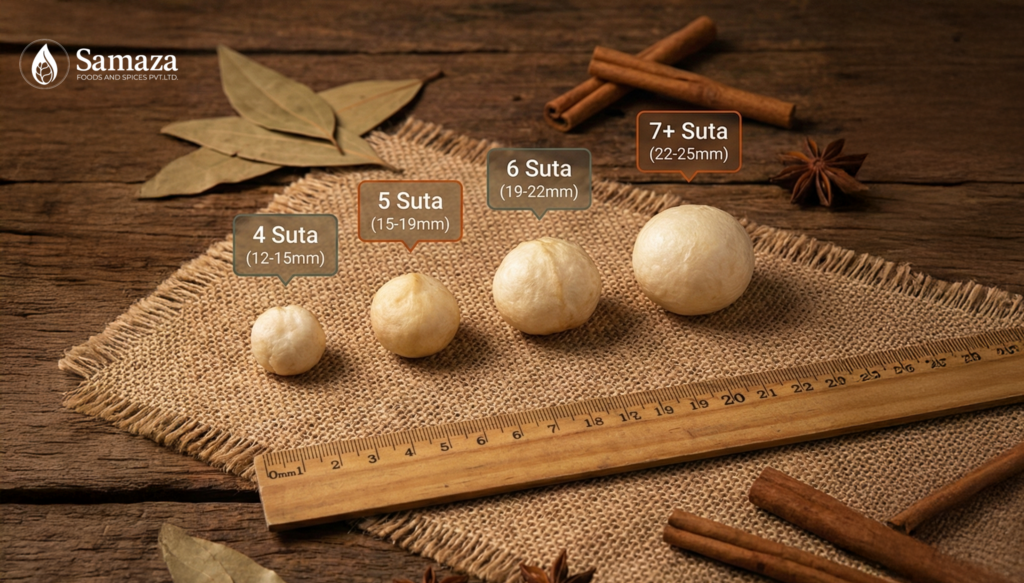
Your Complete Guide to Understanding Makhana Quality Grades—And Picking the Right One For Your Needs
Introduction: Why Makhana Grades Matter (And Why Nobody Explains Them)
You’re looking at a makhana package, and you see “5-sutta” or “6-sutta” written on it. What does that actually mean? Why does it matter? And more importantly, which one should you buy?
If you’ve felt confused by makhana grading, you’re not alone. The sutta system isn’t documented well, and most sellers use it without explaining what it means. This leads to frustrated buyers—people paying more than they should for grades they don’t need, or buying cheaper grades that disappoint them.
Let’s fix that.
This guide explains makhana grades in plain language. We’ll walk through what each grade actually means, who each grade is perfect for, how long each lasts, and how to store them properly. By the end, you’ll know exactly which grade to buy for your specific use case.
What is “Suta”? Understanding the Grading System
“Sutta” is the traditional grading measurement for makhana. It refers to the number of makhana pearls per 100 grams.
Here’s how it works:
- 4-Suta: Approximately 4 large pearls per gram = roughly 400 pearls per 100g (largest size)
- 5-Suta: Approximately 5 medium-large pearls per gram = roughly 500 pearls per 100g (medium-large)
- 6-Suta: Approximately 6 medium pearls per gram = roughly 600 pearls per 100g (standard/most common)
Think of it this way: Lower sutta number = Larger pearls. Higher sutta number = Smaller pearls.
The grading system is based on size consistency and pearl count. It’s a traditional measurement that still works perfectly for understanding what you’re buying
The Three Main Grades: What Each Actually Means
Grade 1: 4-Suta Makhana (Premium/Luxury Grade)
What it looks like: Large, uniform pearl size. Each pearl is noticeably chunky and substantial. Visual consistency is excellent—all pearls look nearly identical in size.
Pop quality: Fully popped, perfect structure, no unpopped or broken pearls in premium batches.
Best described as: “The luxury makhana.”
Perfect for:
- Gifting (it looks impressive, feels premium)
- Special occasions (festive trays, premium gifting)
- Snacking for enjoyment (large pearls feel more satisfying)
- Premium retail packaging (luxury positioning)
- Restaurant premium positioning (looks impressive on the plate)
Why it costs more:
- Larger pearls are harder to achieve consistently
- Higher defect rate in sourcing (smaller imperfect pearls are removed)
- Requires stricter quality control
- More effort in sorting and grading
Taste & Texture: Identical to other grades (makhana is makhana), but the experience feels premium because pearls are larger and more substantial.
Shelf Life: 8-12 months (in proper storage)
Storage: Cool, dry place (below 25°C, humidity below 60%)
Grade 2: 5-Suta Makhana (Standard Premium Grade)
What it looks like: Medium-large, uniform pearl size. Pearls are noticeably larger than standard makhana but smaller than 4-sutta. Visual consistency is very good—slight size variation is normal and acceptable.
Pop quality: Well-popped, minimal unpopped seeds, minimal breakage. Quality is excellent.
Best described as: “The balance—premium quality at a reasonable price.”
Perfect for:
- Regular home snacking (personal consumption)
- Family gifting (nice presentation without luxury pricing)
- Small restaurant/café uses (looks good, costs reasonable)
- Healthy snack boxes (professional appearance)
- Institutional use (schools, offices—quality without excessive cost)
- Your own consumption (cost-effective premium quality)
Why it’s popular: This is the sweet spot. You get genuine quality and good visual presentation without paying luxury prices. Most people buying makhana for themselves choose this grade.
Taste & Texture: Identical to all grades—makhana is makhana. But 5-suta feels more satisfying than 6-suta because pearls are larger.
Shelf Life: 8-12 months (in proper storage)
Storage: Cool, dry place (below 25°C, humidity below 60%)
Grade 3: 6-Sutta Makhana (Standard Grade)
What it looks like: Medium pearl size, more compact appearance. This is the most common makhana you see in retail. Size variation is slightly more noticeable than premium grades, but consistency is still good.
Pop quality: Good quality—well-popped, acceptable defect rate. Occasional broken pearl or unpopped seed, but not excessive.
Best described as: “The everyday makhana.”
Perfect for:
- Budget-conscious snacking (you’re eating it, not gifting it)
- High-volume institutional catering (large events, bulk orders)
- Manufacturing/food production (used as ingredient in other products)
- Baking/cooking (when final size doesn’t matter)
- Grinding into flour (size doesn’t matter for flour)
- Testing before committing to larger quantities (trying makhana for the first time)
- Students, budget shoppers (you want good quality at lower cost)
Why it’s cheapest: Smaller pearls are easier to produce consistently. Defect sorting is less rigorous. You pay for what you get—good makhana at a fair price.
Taste & Texture: Identical to other grades. The experience is slightly less luxurious because pearls are smaller, but the nutritional value and taste are identical.
Shelf Life: 6-10 months (in proper storage)
Storage: Cool, dry place (below 25°C, humidity below 60%)
Visual Comparison: What Each Grade Actually Looks Like
| Aspect | 4-Suta | 5-Suta | 6-Suta |
|---|---|---|---|
| Pearl Size | Large (obviously bigger) | Medium-large (comfortably sized) | Medium (compact) |
| Pearls per 100g | ~400 | ~500 | ~600 |
| Visual Appearance | Premium, impressive | Professional, balanced | Practical, everyday |
| Size Consistency | Extremely uniform | Very uniform | Good uniformity |
| Defect Rate | <1% | 1-2% | 2-3% |
| Pop Quality | Perfect | Excellent | Good |
| Price Relative to 6-Sutta | +40-50% | +15-25% | Baseline |
| “Wow” Factor | High (impressive) | Medium (nice) | Low (practical) |
Use-Case Framework: Which Grade Is Right For You?
Use Case 1: Gifting
Scenario: You want to gift makhana to friends or family.
Recommendation:
- Premium gifting (want to impress): 4-Suta
- Nice gifting (good impression): 5-Suta
- Budget gifting (want quality without overspending): 6-Suta
Why: Larger pearls look more impressive. When someone opens a gift, they judge partly by visual appearance. Larger pearls make makhana look more luxurious.
Pro Tip: 5-Suta is the sweet spot for gifting—it looks premium without requiring luxury pricing.
Use Case 2: Personal Snacking
Scenario: You’re buying for yourself—daily snacking, healthy eating.
Recommendation:
- Want the best experience: 5-Suta
- Budget-conscious: 6-Suta
- Really love makhana: 4-Suta (treat yourself)
Why: For personal consumption, you’re choosing based on preference and budget. 5-Suta feels most satisfying because the pearls are larger. 6-Suta is perfectly good—just slightly less luxurious feeling. 4-Sutta is only necessary if you’re treating makhana as a luxury snack.
Pro Tip: Buy 500g of 5-Suta to try. It’s the Goldilocks of makhana—not too expensive, but noticeably better than 6-Suta.
Use Case 3: Institutional Catering
Scenario: You’re running a school, office, or event catering operation. You need good quality but volume and cost matter.
Recommendation: 6-Sutta (primarily)
Why: When serving 100+ people, individual pearl size matters less than overall quality and cost efficiency. 6-Sutta delivers good quality at the best price point for high-volume situations.
Pro Tip: Buy in bulk (50-100kg). At high volumes, 6-Sutta becomes even more cost-effective. Your guests will enjoy it—they won’t know they’re eating a “lower” grade. They’ll just know it’s good makhana.
Use Case 4: Restaurant/Café Service
Scenario: You’re a restaurant featuring makhana in dishes or snacks.
Recommendation depends on positioning:
- Premium/luxury positioning: 4-Suta or 5-Suta (visual impact on plate)
- Health-conscious casual: 5-Suta or 6-Suta (good quality, cost-efficient)
- High-volume QSR: 6-Suta (ingredient focus, volume efficiency)
Why: When plating matters, larger pearls look better visually. When ingredient consistency matters more than appearance, grade becomes less critical.
Pro Tip: Test different grades in your specific recipes. You might find that 5-Suta looks premium and serves your cost structure better than 4-Suta.
Use Case 5: Cooking/Baking Ingredient
Scenario: You’re using makhana in curries, granola, energy bars, or other preparations.
Recommendation: 6-Suta (absolutely)
Why: Final pearl size doesn’t matter when they’re combined with other ingredients. You’re paying for the ingredient, not the visual presentation. 6-Suta is cost-efficient without sacrificing quality.
Pro Tip: You could even consider bulk 6-Suta or slightly lower grades if available—the final product is what matters, not individual pearl size.
Use Case 6: First-Time Makhana Buyer
Scenario: You’re trying makhana for the first time. You want good quality but don’t want to overspend.
Recommendation: Buy 200-250g of 5-Suta
Why: 5-Sutta gives you the genuine makhana experience without luxury pricing. You’ll understand why people love it. If you like it, you can buy larger quantities and adjust grades based on your preference.
Pro Tip: Try it plain first (no added salt or seasoning) so you experience the natural flavor. Then try with light seasoning. This helps you evaluate quality accurately.
Shelf Life & Storage: Making Your Makhana Last
All makhana grades store similarly, but conditions matter significantly.
Shelf Life by Grade
| Grade | Shelf Life | Notes |
|---|---|---|
| 4-Sutta | 8-12 months | Premium preservation; less handling means better longevity |
| 5-Sutta | 8-12 months | Standard longevity with proper storage |
| 6-Sutta | 6-10 months | Slightly shorter due to more handling in grading |
Storage Conditions That Matter
Temperature: Store below 25°C
- Room temperature (20-22°C) is ideal
- Avoid direct sunlight
- Don’t store near heat sources (kitchens, warm rooms)
- Hot storage (above 28°C) reduces shelf life significantly
Humidity: Keep below 60%
- Makhana absorbs moisture
- In humid environments, it becomes soft and loses crispness
- Use airtight containers in humid climates
- Silica packets in storage containers help absorb excess moisture
Container: Airtight is best
- Glass jars with sealed lids work perfectly
- Airtight plastic containers work well
- Ziplock bags work if you remove excess air
- Avoid paper bags (moisture permeates easily)
Original packaging: If sealed, it’s fine to keep in original packaging
- Most quality makhana is packaged in airtight containers
- Keep it sealed until you open
- Once opened, transfer to airtight storage for best results
How to Tell If Makhana Has Gone Bad
Don’t eat if:
- Visible mold (any discoloration, fuzzy growth)
- Musty smell (indicates moisture and possible mold)
- Soft/soggy (has absorbed moisture, will taste stale)
- Rancid smell (oil has oxidized—rarely happens with proper storage)
- Insect damage (rare, but occasionally happens in poor storage)
Still fine if:
- Slight color variation (natural—doesn’t affect quality)
- One or two broken pearls (normal wear, doesn’t indicate spoilage)
- Slight staleness (can be revived by gentle heating—see below)
Reviving Stale Makhana
If your makhana has lost crispness but hasn’t spoiled:
- Spread on baking sheet (single layer, no piling)
- Heat at 120°C for 5-10 minutes (just to dry out, not roast further)
- Cool completely before eating
- Store immediately in airtight container
This often restores crispness. Don’t overheat—you’re drying, not roasting.
Price Comparison: Understanding Why Grades Cost Different
Real-World Pricing Example
| Grade | Price/kg | Per 100g | Per 30g Serving |
|---|---|---|---|
| 4-Sutta | ₹650-800 | ₹65-80 | ₹20-24 |
| 5-Sutta | ₹550-650 | ₹55-65 | ₹17-20 |
| 6-Sutta | ₹450-550 | ₹45-55 | ₹14-17 |
Prices vary by supplier, location, and volume. These are typical ranges.
Why the Price Difference?
4-Suta commands premium pricing because:
- Larger pearls are harder to produce consistently
- Higher percentage of small pearls must be rejected
- More careful sorting and grading required
- Premium market positioning
5-Suta is mid-priced because:
- Good balance between size consistency and efficiency
- Standard market grade
- Popular enough for volume efficiency
- Best price-to-quality ratio
6-Suta is most affordable because:
- Easier to grade (less strict sizing requirements)
- More pearls = more efficient use of raw material
- Highest volume production
- Economy of scale in sorting
Cost Per Serving Analysis
For a 30g serving (typical snack portion):
- 4-Suta: ₹20-24 per serving (₹600-720/month if eating daily)
- 5-Suta: ₹17-20 per serving (₹510-600/month if eating daily)
- 6-Suta: ₹14-17 per serving (₹420-510/month if eating daily)
Monthly difference:
- 4-Suta vs. 6-Suta = ₹90-210/month difference for daily snacking. That’s ₹3-7 per day for an upgrade in experience
For gifting or occasional treats, this difference is negligible. For high-volume institutional use, it adds up.
Decision Framework: A Quick Guide to Choosing
Answer these three questions:
Question 1: What’s the primary use?
- Gifting/Special Occasion → Go up one grade (4-Sutta if budget allows, else 5-Sutta)
- Personal Snacking → Go with 5-Sutta (sweet spot)
- Bulk/Catering/Cooking → Go with 6-Sutta (efficiency)
- First time trying → Go with 5-Sutta (best introduction)
Question 2: What’s your budget comfort?
- Budget-conscious → 6-Suta
- Balanced (most people) → 5-Suta
- Premium/treating yourself → 4-Suta
Question 3: How much visual appeal matters?
- Matters a lot (gifting, restaurant plating) → 4-Suta or 5-Suta
- Matters moderately (looks nice, is consumed) → 5-Suta
- Doesn’t matter much (ingredient use, bulk eating) → 6-Suta
Quick Buyer’s Checklists
For Retail/Personal Customers
First-time buyer?
- Start with 250g of 5-Sutta
- Try it plain and seasoned
- Store in airtight container
- Decide if you prefer larger pearls (4-Sutta) or are happy with 5-Sutta
Regular personal snacker?
- 5-Sutta is your friend (best value + satisfaction)
- Buy 500g-1kg at a time
- Store properly (cool, dry, airtight)
- Check every 3 months for freshness
Planning to gift?
- 4-Sutta for luxury/impressive gifting
- 5-Sutta for nice/balanced gifting
- 6-Sutta for generous/budget-conscious gifting
- Use attractive packaging (presentation matters)
Cooking/Baking?
- 6-Sutta is perfect (grade doesn’t matter in final product)
- Buy in bulk (500g-5kg depending on use)
- Storage in airtight container
For B2B/Procurement
Catering/Institutional Bulk Buying?
- 6-Sutta primary choice (volume efficiency)
- Negotiate volume pricing (50kg+ orders)
- Confirm delivery schedule and consistency
- Request batch documentation
Restaurant/Café Premium Positioning?
- Trial 5-Sutta first (most cost-efficient premium choice)
- Test in your specific recipes
- Compare 4-Sutta if plate presentation critical
- Establish consistent supply partnership
Food Manufacturing/Ingredient Sourcing?
- 6-Sutta primary (cost-efficient)
- Negotiate long-term bulk pricing
- Confirm quality consistency for production
- Establish dedicated supply line if volume significant.
Common Questions First-Time Buyers Ask
Q: Does a higher sutta number mean lower quality?
A: No. All three grades are quality products. “Sutta” is just a size classification. A 6-sutta makhana is just as well-roasted, tasty, and nutritious as 4-sutta. The only difference is pearl size. Think of it like coffee—a smaller bean isn’t lower quality; it’s just a different size.
Q: Should I always buy the highest grade (4-sutta)?
A: Not necessarily. If you’re buying for personal snacking and budget matters, 5-sutta or 6-sutta is perfectly fine. 4-sutta is only worth it if you specifically want the luxury experience or are gifting. Don’t overspend for your actual use case.
Q: How do I know if I’m getting the true 4-sutta or the misrepresented 5-sutta?
A: Buy from reputable sources. Quality suppliers provide accurate grading. If the pricing seems too good to be true for a claimed grade, it probably is. Ask for batch documentation or samples before committing to large orders.
Q: Does freshness matter more than grade?
A: For taste and texture, yes. A fresh 6-sutta is better than a stale 4-sutta. However, properly stored makhana lasts 6-12 months, so freshness is usually not the limiting factor if you buy from reliable sources.
Q: Can I mix grades when cooking?
A: Yes, absolutely. For curries, baking, or cooking, mixing grades is fine. Size variation doesn’t matter in the final dish.
Q: Is 5-sutta really the best value?
A: For most people, yes. It’s the grade that balances price and experience most effectively. You get noticeably better quality/satisfaction than 6-sutta, but without the luxury pricing of 4-sutta.
Q: How much makhana should I order for my use case?
A:
- Personal snacker (daily): 500g lasts about 2 weeks → 1-2kg per month
- Occasional snacker: 250g lasts 1 month
- Gifting: 200-250g per gift
- Catering (100 people): 5-10kg depending on application
Q: Can I return makhana if I’m not happy?
A: Depends on the seller. Quality sellers offer samples or satisfaction guarantees. Always clarify return/exchange policy before buying, especially for larger orders.
Conclusion: Choosing the Right Grade Is About Your Use Case, Not “Better” or “Worse”
Here’s the truth about makhana grades: there’s no universally “best” grade. There’s only the best grade for your specific situation.
- Gifting something impressive: 4-Suta
- Your regular snacking pleasure: 5-Suta
- Feeding a crowd cost-efficiently: 6-Suta
- First-time trying makhana: 5-Suta
All three are quality products from reputable sources. The sutta system is just a way to classify by size. Nutritionally, they’re identical. Taste-wise, they’re identical. The only real difference is pearl size and price.
Choose the grade that matches your actual use case and budget. Don’t overspend for grades you don’t need. Don’t underbuy and regret it.
And remember: properly stored makhana is delicious for 6-12 months. Keep it cool, dry, and sealed. Your investment will last.
Ready to Choose Your Perfect Makhana Grade?
Now that you understand the grades, you can make an informed choice. Whether you’re buying 250g for personal snacking or 50kg for catering, you know exactly what you’re getting.
Questions about which grade is right for you? Reach out.
Samaza offers all three grades—4-sutta, 5-sutta, and 6-sutta—in quantities from 250g personal purchases to bulk institutional orders.
Ready to order? Visit our retail site or contact our B2B team for bulk pricing and customized sourcing.
Not sure which grade? Let’s chat. Tell us your use case, and we’ll recommend the perfect fit.
Want samples to compare? We can provide samples of all three grades so you experience the difference directly.