Samaza | Premium Makhana Manufacturer & Bulk Supplier India

Pure Ingredients. Honest Origins

Makhana Benefits

All posts related to benefits of the superfood -Makhana

The Ultimate ‘Smart Snack’ Swap

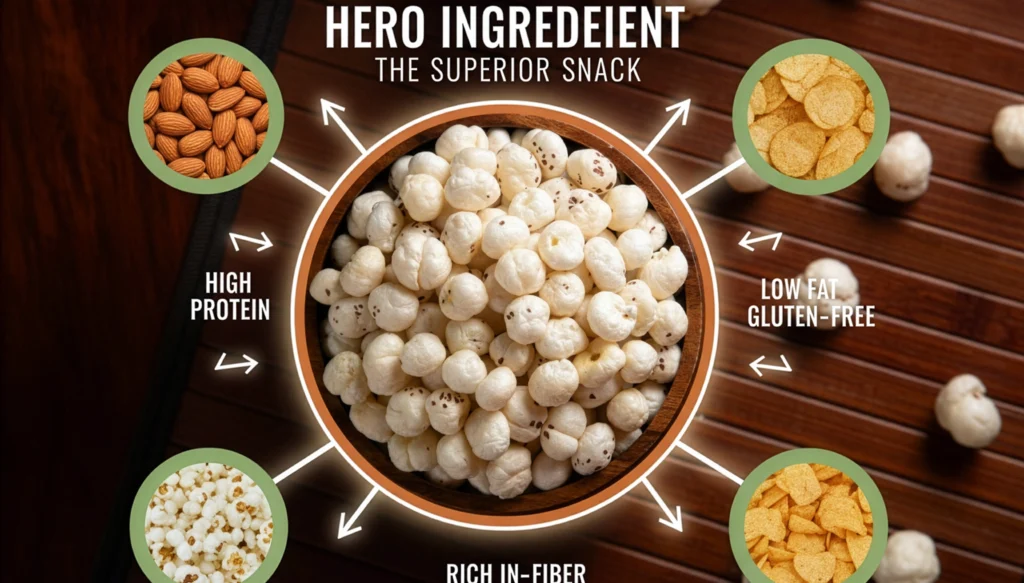
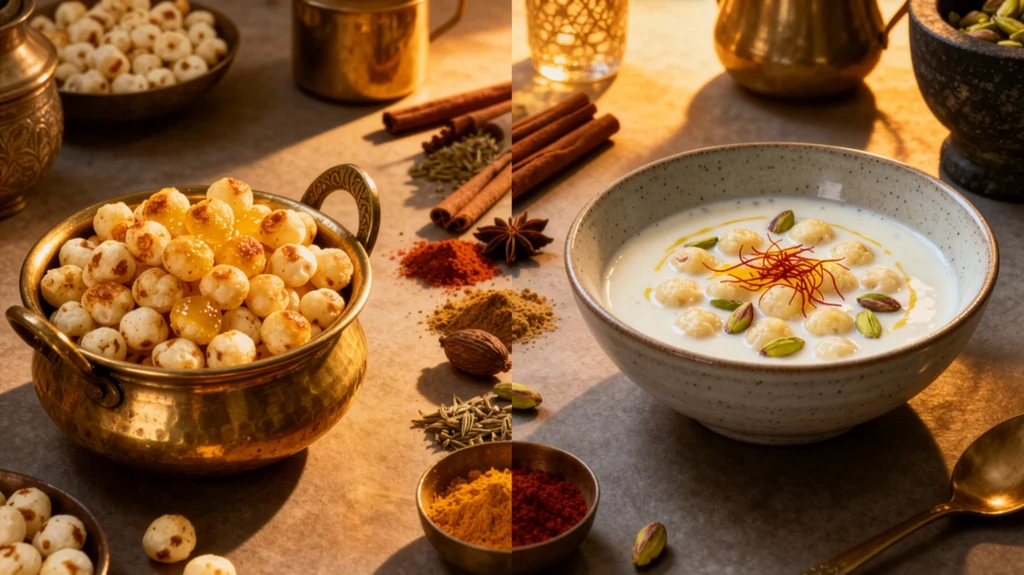
See Why Makhana Is the Guilt-Free Fuel You’ve Been Looking For—It’s the Upgrade Your Pantry Deserves In a world of endless snacking options filled with artificial additives, empty calories, and guilty indulgences, there’s a timeless solution sitting right in front of you: makhana. Also known as fox nuts, these crispy, delightful seeds are the upgrade your pantry has been waiting for. Whether you’re following a strict diet, managing your health, or simply seeking smarter snacking choices, Samaza’s premium makhana delivers on every front—without compromise. Crush Your Cravings: The Fiber-Protein Powerhouse That Keeps You Fuller, Longer One of the most frustrating aspects of modern snacking is the endless cycle of hunger and cravings. You eat a snack, feel momentarily satisfied, and then thirty minutes later, you’re reaching for something else. Makhana breaks this exhausting pattern.​ Packed with substantial amounts of fiber (7-8g per 100g serving) and plant-based protein (9.7g per 100g), makhana works in harmony with your body to create lasting satiety. The fiber expands in your digestive system, creating a genuine feeling of fullness, while the protein stabilizes your blood sugar and supports muscle maintenance. This dynamic duo doesn’t just fill your stomach—it satisfies your body’s actual nutritional needs.​ A simple handful (approximately 30g) of makhana delivers approximately 3g of protein and 2.4g of fiber, making it far superior to conventional snacks like chips or crackers that leave you hungry an hour later. Unlike processed snacks that spike your blood sugar and crash just as quickly, makhana provides sustained satisfaction. This means fewer cravings, less mindless snacking, and genuine control over your eating habits. For anyone serious about breaking the snacking trap, Samaza’s makhana is the answer.​ Keto & Paleo Perfect: The Ultimate Low-Carb, High-Energy, Gluten-Free Fuel If you’re following a ketogenic, paleo, or any other specialized diet, makhana deserves a permanent place in your rotation. This ancient superfood aligns perfectly with the nutritional requirements of contemporary dietary approaches—with absolutely no compromises.​ The Keto-Friendly Profile: With only 65g of carbohydrates per 100g of raw makhana and minimal fat (0.1g), makhana fits seamlessly into ketogenic macros when consumed in appropriate portions. A 30g serving contains approximately 19g of carbohydrates, but the high fiber content (approximately 2.4g per 30g serving) significantly reduces net carbs, making it a viable option for those monitoring carbohydrate intake.​ The Paleo Alignment: Makhana is a seed, not a processed grain or legume, making it naturally aligned with paleo principles. It’s free from gluten, phytic acid concerns, and anti-nutrients that plague many conventional snacks. For paleo enthusiasts, makhana offers sustained energy through complex carbohydrates without any of the inflammatory concerns associated with grains.​ Naturally Gluten-Free: Unlike many protein-rich snacks and alternatives that contain hidden gluten or are processed in shared facilities, makhana is inherently gluten-free. This makes it an ideal choice for individuals with celiac disease, gluten sensitivity, or those simply seeking to minimize gluten intake.​ The beauty of Samaza’s makhana lies in its purity. Without additives, preservatives, or questionable ingredients, you get exactly what nature intended—a complete superfood that adapts to your dietary philosophy, regardless of how strict your approach might be.​ Lighter Than Popcorn: All the Crunch With None of the Hassle Popcorn has long been celebrated as a lighter snacking alternative, but it carries hidden challenges: it’s difficult to digest, often stuck in teeth, requires constant seasoning to taste good, and offers minimal nutritional value. Makhana addresses every one of these shortcomings.​ Superior Crunchiness: Roasted makhana delivers the same satisfying crunch as popcorn, but with a more substantial, nutrient-dense bite. Each piece is naturally solid and satisfying without requiring excessive seasoning or oil.​ Easier Digestion: Unlike popcorn hulls, which can irritate sensitive digestive systems, makhana is gentle and easy to digest. This makes it suitable for everyone—including children, elderly individuals, and those with digestive sensitivities. The high fiber content in makhana actually supports digestive health rather than potentially compromising it.​ No Pesky Kernels Stuck in Teeth: Popcorn kernels notoriously become lodged between teeth, creating discomfort and requiring immediate intervention. Makhana simply dissolves into the mouth without this frustration—you can enjoy your snack without post-snacking dental emergencies.​ Pure Nutrition Without the Filler: A cup of raw makhana contains just 130 calories, making it significantly lighter than many popcorn varieties, while delivering substantially more nutritional density. You’re getting actual nutrition—protein, fiber, minerals, and antioxidants—rather than just volume and air.​ Samaza’s premium roasted makhana can be enjoyed plain to appreciate its delicate, nutty flavor, or lightly seasoned with your favorite spices for a flavor experience that surpasses conventional popcorn every single time. The Anytime Food: A Versatile, Clean Canvas for Any Flavor One of makhana’s most underrated attributes is its remarkable versatility. Unlike many superfoods that only work in specific contexts, makhana seamlessly transitions from morning to night, from sweet to savory, from simple snacks to elaborate dishes.​ Morning Energy: Ground makhana flour added to smoothies, oatmeal, or yogurt bowls provides sustained energy and protein to start your day right. The mild, nutty flavor complements both sweet (honey, berries, cinnamon) and savory (turmeric, ginger) preparations equally well.​ Midday Sustenance: Roasted makhana with a pinch of sea salt and minimal oil serves as the perfect midday pick-me-up when energy naturally dips. It’s light enough not to induce afternoon sluggishness, yet substantial enough to carry you through to dinner.​ Late-Night Savory Snack: Unlike heavy or overstimulating snacks, makhana makes an ideal evening snack. Lightly seasoned with your preferred spice blend—cumin, chili powder, herb seasonings—it satisfies the urge to snack without disrupting sleep quality.​ Incorporated Into Meals: Add roasted makhana to salads for textural contrast, incorporate them into grain bowls, use them as a garnish for curries, or blend them into plant-based sauces as a thickening agent.​ Sweet Applications: Makhana kheer (a traditional rice pudding-style dessert) showcases the seed’s ability to shine in sweet contexts, providing substance and nutrition without refined sugar dependency.​ Flour-Based Creation: When ground into flour, makhana becomes the foundation for gluten-free baking, offering nutritional density and unique flavor to breads, cookies, and pastries.​ This adaptability means

The Ultimate ‘Smart Snack’ Swap Read More »
A Tradition of Wellness: The Pure Power of Makhana

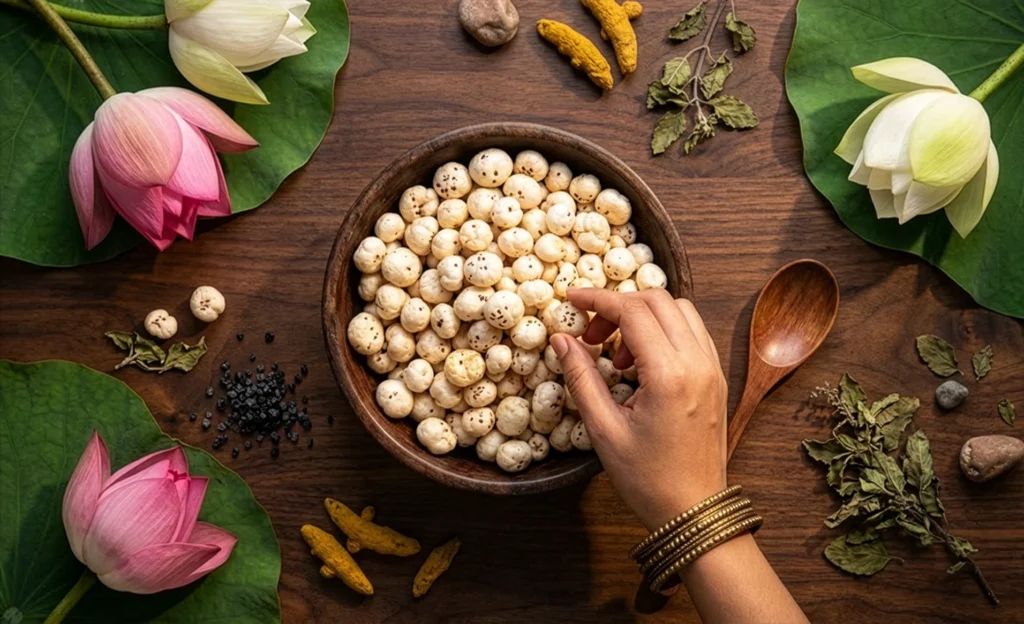
More Than Just a Snack: Foxnuts Are an Ancient Superfood Prized in Ayurveda for Their Potent, Natural Benefits Foxnuts, also known as makhana or Euryale ferox, have been cherished for over two centuries in Indian cuisine and traditional Ayurvedic medicine. Far from being merely a tasty snack, these ancient seeds represent a nutritional powerhouse that bridges the gap between traditional wellness practices and modern nutritional science. Whether you encounter them during religious fasts, as a beloved street snack, or as part of wellness routines, foxnuts deserve a prominent place in your everyday diet. The Ancient Legacy of Foxnuts in Ayurveda The reverence for foxnuts in Ayurvedic philosophy runs deep. Referenced in the renowned “Charaka Samhita,” one of Ayurveda’s most respected scriptures, foxnuts are categorized as “Shaka Varga,” meaning aquatic vegetable varieties. This ancient classification reflects their holistic approach to balancing the body’s energies—Vata, Pitta, and Kapha doshas—making them uniquely adaptable to different body constitutions.​ In Ayurvedic practice, foxnuts are celebrated for multiple therapeutic properties. They are known as “Garbha Sansthapaka,” meaning they support healthy pregnancies, and “Vrushya,” signifying their role as aphrodisiacs that enhance vigour and vitality. Additionally, they serve as brain tonics that ease the mind and provide relief from conditions like insomnia, underscoring their importance in mental wellness.​ Rich in Plant Protein: Your Perfect Fulfilling Snack One of the most compelling reasons to include foxnuts in your diet is their exceptional protein content. With approximately 9.7 grams of protein per 100 grams of raw makhana, foxnuts provide a vital source of this essential macronutrient. This makes them particularly valuable for muscle repair, recovery, and growth—whether you’re an athlete, an active individual, or simply someone seeking sustained energy throughout the day.​ Unlike many processed snacks that leave you feeling unsatisfied and reaching for more, foxnuts deliver genuine satiety. The combination of protein and fiber creates a feeling of fullness that lasts, making them an ideal choice for those managing weight or seeking healthier snacking alternatives. When you reach for Samaza’s premium foxnuts, you’re choosing a snack that nourishes rather than depletes.​ Low Glycemic: Sustained Energy Without the Crash In today’s world of blood sugar volatility and energy crashes, foxnuts stand out for their naturally low glycemic index. This means they release glucose slowly and steadily into the bloodstream, providing sustained energy without the dramatic spikes and crashes associated with refined carbohydrates.​ This property makes foxnuts exceptionally beneficial for individuals managing diabetes or those simply conscious of maintaining stable blood sugar levels. The slow glucose release keeps you mentally sharp, physically energized, and helps prevent the afternoon energy slump that leads many people to reach for unhealthy quick fixes. For those seeking natural, sustainable energy, foxnuts represent an intelligent dietary choice.​ Mineral-Rich: Supporting Heart and Bone Health Foxnuts are an incredible natural source of essential minerals that your body needs for optimal functioning. With significant amounts of magnesium, potassium, and calcium, these ancient seeds contribute meaningfully to cardiovascular and skeletal health.​ Magnesium plays a crucial role in maintaining normal metabolism, supporting muscle and nerve function, and protein production. Potassium helps regulate blood pressure naturally, supporting cardiovascular health and reducing the risk of hypertension-related complications. The low sodium content combined with high potassium makes foxnuts particularly beneficial for individuals concerned with heart health.​ Calcium strengthens bones and teeth, making foxnuts an excellent addition to your diet for maintaining bone density and preventing fractures—particularly important for women at risk of osteoporosis. Per 100 grams, foxnuts contain approximately 60-76 mg of magnesium and around 20 mg of calcium, demonstrating their mineral density.​ Anti-Inflammatory and Antioxidant: Calming Your Body From Within Perhaps one of the most scientifically validated properties of foxnuts is their potent antioxidant and anti-inflammatory capacity. These ancient seeds contain beneficial compounds such as gallic acid, chlorogenic acid, and epicatechin—powerful antioxidants that combat oxidative stress and inflammation in the body.​ Inflammation is increasingly recognised as a contributing factor to modern chronic diseases, including diabetes, arthritis, rheumatism, and cardiovascular conditions. The natural compounds in foxnuts, particularly kaempferol, work to reduce inflammation and support the body’s natural healing processes. This anti-inflammatory action extends to digestive support as well, helping to calm the digestive tract and promote healthy gut function.​ Regular consumption of foxnuts may help slow the ageing process, enhance skin health by protecting against oxidative damage, and support overall cellular vitality. The antioxidant activity of foxnut seed extracts has been demonstrated in scientific studies, showing relatively high levels of radical scavenging activity.​ Additional Health Benefits Beyond the core benefits, foxnuts offer several additional advantages that make them a truly comprehensive superfood: Digestive Support: The high fiber content—approximately 14.5 grams per 100 grams—promotes healthy digestion and helps prevent constipation by adding beneficial bulk to your diet.​ Weight Management: Low in calories (362 kcal per 100g raw) and minimal fat content (0.1g), foxnuts provide substantial nutrition without excess calories, making them ideal for weight-conscious individuals.​ Gluten-Free Option: For those with wheat allergies or celiac sensitivities, foxnuts offer high protein and carbohydrate content without any gluten.​ Brain Health: High in thiamine, foxnuts support cognitive function and nerve health through the production of acetylcholine, a key neurotransmitter.​ Detoxification: Foxnuts act as natural detoxifying agents, helping to flush toxins from the body and supporting spleen health, which is vital for recycling red blood cells and supporting immune function.​ How to Incorporate Foxnuts Into Your Daily Routine The versatility of foxnuts makes them easy to incorporate into your lifestyle: As a Simple Snack, enjoy roasted foxnuts with a light sprinkle of salt or mild spices for a satisfying crunch between meals. In Traditional Dishes: Prepare makhana kheer (a sweet porridge), add them to vegetable curries, or create rayta (yoghurt-based dishes) for enhanced nutrition. In Salads: Top your salads with roasted foxnuts for added texture, protein, and nutritional value. In Baking: Use foxnut flour to create gluten-free baked goods with a unique texture and enhanced nutritional profile. The recommended daily consumption is approximately 25-30 grams—roughly a small handful—to reap the full benefits without exceeding caloric needs. This modest serving

A Tradition of Wellness: The Pure Power of Makhana Read More »

The 4 PM Slump: Why Your Office Desk Needs a Jar of Makhana

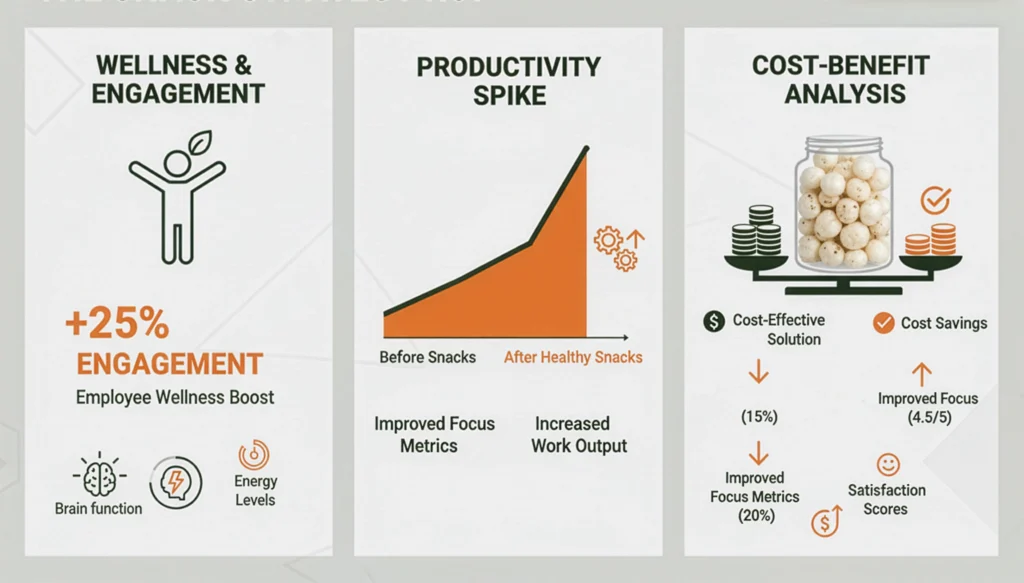
It happens like clockwork. It is 4:00 PM on a Thursday. You have been staring at the same email draft for seven minutes. The words are blurring together, and your motivation—which was so strong at 9:00 AM—has completely evaporated. Your eyelids feel heavy, your patience is thin, and every “ping” from Slack feels like a personal attack. You are experiencing the universal corporate phenomenon known as the Afternoon Slump. And right now, your brain is screaming for a quick fix. You are probably thinking about walking to the vending machine for a chocolate bar, raiding the office cookie jar, or brewing a third cup of coffee just to survive until 5:30 PM. Stop. Put the mug down. There is a better way to power through the final stretch of the workday—one that doesn’t involve a jittery caffeine high or a sugar crash that leaves you exhausted by dinner time. It involves a simple glass jar sitting on your desk, filled with the ultimate productivity fuel: Makhana (Fox Nuts). In this guide, we are going to break down the science of why you crash, why your current snacks are making it worse, and how a simple switch to Samaza Makhana can reclaim your afternoon focus. The Science: Why You Crash at 4 PM You aren’t lazy. You aren’t “losing your edge.” You are just biological. The afternoon slump is a physiological perfect storm caused by three internal systems colliding at once. Understanding them is the first step to beating them. 1. The Circadian Rhythm Dip Your body temperature naturally drops between 2:00 PM and 4:00 PM. This drop signals your brain to release melatonin (the sleep hormone). It is a primal biological rhythm designed for a mid-day rest (siesta), but in the modern office, you are trying to fight millions of years of evolution with a spreadsheet. 2. The Post-Lunch Glucose Rollercoaster Think about what you had for lunch. Was it a sandwich? A bowl of rice? Pasta? If it was heavy in simple carbohydrates, your blood sugar spiked around 1:00 PM. By 4:00 PM, your insulin has done its job too well, causing your blood sugar to crash below baseline. This state, called reactive hypoglycemia, is the primary cause of “brain fog.” 3. The “Cortisol Gap” Your stress hormone (cortisol) acts as a natural wake-up signal. It peaks in the morning and naturally tapers off in the late afternoon. Without that natural chemical alertness, your focus drifts. Your body is literally screaming for fuel to bridge the gap. The problem is, most offices are stocked with the wrong fuel. Why Traditional Office Snacks Are Traps Most office pantries are filled with items that are saboteurs in disguise. The Candy Bar / Cookie: It gives you a 15-minute rush of dopamine. But it’s a loan with high interest. The subsequent insulin spike crashes your energy even lower than before, leading to the “5 PM Zombie Mode.” The Coffee: Drinking caffeine at 4 PM is dangerous. With a half-life of ~5-6 hours, that coffee is still in your system at 10 PM, ruining your deep sleep. You wake up tired tomorrow, needing more coffee, creating a cycle of dependency. The “Healthy” Granola Bar: Check the label. Most are held together with high-fructose corn syrup or cheap dates that stick to your teeth and spike your sugar just like a candy bar. You need a snack that offers sustained release, not a spark. The Makhana Solution: Productivity in a Jar Makhana isn’t just a traditional Indian snack; it is high-performance fuel for the modern knowledge worker. Here is the specific nutritional science of why it belongs next to your laptop. 1. The “Slow Burn” Energy Makhana is a complex carbohydrate with a low Glycemic Index (GI). Unlike a biscuit that dissolves instantly, makhana takes time to digest. It releases glucose into your bloodstream like a slow-drip IV rather than a firehose. This gives you 2 hours of steady, calm focus—exactly what you need to finish that presentation. 2. Brain-Boosting Amino Acids Makhana is a source of Tyrosine and Arginine. Tyrosine is a precursor to dopamine and norepinephrine—neurotransmitters that regulate alertness and focus. Arginine boosts nitric oxide, improving blood flow to the brain. Translation: It’s a subtle, natural mood lift that helps you handle stress better. It won’t make you a genius, but it might stop you from snapping at your manager during the weekly wrap-up. 3. No “Greasy Keyboard” Syndrome Let’s be practical. Potato chips leave grease on your fingers. Popcorn leaves hulls in your teeth.Samaza’s roasted Makhana is dry, clean, and leaves no residue. You can type, snack, and scroll without needing a wet wipe or worrying about getting oil on your trackpad. It is the ultimate “multitasking” food. Real Stories from the Cubicle We asked real professionals how switching to Makhana changed their workday efficiency. The Consultant:“I used to drink a latte at 3:30 PM every day before client calls. I’d be hyper for the meeting but crash by the time I had to write the report. I switched to a jar of peri-peri Makhana. I stay sharp for the call, but I’m calm enough to focus on the deep work afterwards. My reports have fewer errors now.”— Arjun, Management Consultant, Mumbai The Coder:“Bug fixing requires intense focus. Sugar crashes make me write sloppy code. Makhana is the only snack I can eat mindlessly while debugging that actually keeps my brain ‘online’. Plus, no crumbs in my mechanical keyboard.”— Sarah, Senior Backend Developer, Bangalore The HR Director:“I keep a big bowl of Makhana in our break room now. The team actually gathers around it. It’s better than the donuts we used to have—people aren’t sluggish in the 4 PM wrap-up meeting anymore. It’s become a weirdly positive bonding ritual.”— Vikram, HR Lead, Gurugram For the Bosses: The ROI of “Good Snacking” If you are an HR leader or Wellness Coordinator, this section is for you.Nutrition impacts productivity by up to 20% (according to the International Labour Organization). When you provide snacks that cause crashes, you are paying for two hours of “presenteeism”—employees who are physically at their desks but mentally

The 4 PM Slump: Why Your Office Desk Needs a Jar of Makhana Read More »

The “Ozempic” Alternative? Why Makhana is Nature’s Weight Loss Secret

Open any social media app right now, and you’ll see the same word trending: Ozempic. It seems like everyone—from Hollywood celebrities to your neighbor—is talking about the “magic shot” that melts away pounds by silencing “food noise.” The results are undeniable, but so is the controversy. Between the steep price tag (often over ₹10,000–₹15,000 per month in India or $1,000+ in the US), the potential side effects (nausea, “Ozempic face,” muscle loss), and the fear of long-term dependency, millions of people are searching for a safer, natural middle ground. They are looking for “Nature’s Ozempic.” While supplements like Berberine have grabbed headlines, there is a simpler, ancient superfood that has been working on the same principles for centuries—without a single needle. Enter Makhana (Fox Nuts). ⚠️ The Honest Disclaimer Before we dive in, let’s be scientifically clear: Makhana is not a pharmaceutical drug. It will not artificially flood your system with synthetic hormones. If you have a medical condition requiring GLP-1 agonists, a bowl of fox nuts is not a substitute for your doctor’s prescription. However, if you are looking for a powerful, natural tool to manage hunger, stabilize blood sugar, and support sustainable weight loss without medication, read on. How Does “Ozempic” Actually Work? (The Science Simplified) To understand why Makhana is a viable natural alternative, we first need to understand what these drugs actually do. Ozempic and Wegovy mimic a hormone in your gut called GLP-1 (Glucagon-like peptide-1). This hormone does three critical things: Signals Satiety: It tells your brain, “We are full. Stop eating.” Slows Gastric Emptying: It keeps food in your stomach longer, so you feel full for hours after a meal. Regulates Blood Sugar: It prevents insulin spikes that trigger fat storage. Basically, it turns down the volume on your hunger. The good news? You can trigger similar biological mechanisms naturally through specific food chemistry. Makhana: The Natural GLP-1 Supporter Makhana isn’t just “low calorie.” Its unique nutritional structure mimics the effects of GLP-1 medication in four distinct ways. 1. The Resistant Starch Factor (The Secret Weapon) This is the science most people miss. Makhana contains resistant starch—a specific type of carbohydrate that bypasses digestion in the small intestine and ferments in your large intestine. The Mechanism: This fermentation produces Short-Chain Fatty Acids (SCFAs), specifically butyrate. The Result: Research shows that SCFAs naturally stimulate your body to produce its own GLP-1 hormone. Instead of injecting synthetic GLP-1, you are feeding the gut bacteria that signal your body to make it naturally. This is the truest definition of “food as medicine.” 2. The “Volume Eating” Hack One of the hardest parts of weight loss is the physical feeling of an empty stomach. Ozempic works by physically slowing digestion. Makhana achieves a similar “fullness” feeling through volume. The Physics: Makhana is a high-volume, low-density food. A 30g serving fills an entire medium-sized bowl but contains only ~100 calories. The Signal: The fiber expands in your stomach, physically stretching the stomach lining. This stretch triggers the vagus nerve to send “satiety” signals to your brain—mechanically replicating the “I’m full” signal that drugs try to induce chemically. 3. The Protein Sparing Effect (Avoiding the “Ozempic Look”) One major downside of rapid drug-induced weight loss is muscle wasting (sarcopenia), leading to a “gaunt” look and a crashed metabolism. The Makhana Advantage: With ~3g of high-quality plant protein per serving (containing essential amino acids like arginine), Makhana helps preserve lean muscle mass. Muscle burns more calories than fat; by protecting your muscle, you protect your metabolism. 4. The Blood Sugar Brake With a low Glycemic Index (GI) often lower than rice or bread, Makhana releases energy slowly. It prevents the insulin spike-and-crash cycle. Why this matters: High insulin levels lock fat cells, making it impossible to burn fat. By keeping insulin low and stable, Makhana keeps your body in “fat-burning mode” rather than “storage mode.” The Science of Satiety: Why You Stop Eating Have you ever eaten a bag of chips and felt hungry 20 minutes later? That’s because processed carbs dissolve quickly, giving you zero satiety signal. In a weight loss context, satiety > calories.Studies on the “Satiety Index” confirm that fiber-rich, protein-containing foods promote a feeling of fullness that lasts up to twice as long as simple carbohydrates. When you snack on Makhana at 4 PM, you aren’t just saving calories in that moment; you are likely eating 15–20% less at dinner because your hunger hormones (Ghrelin) are still suppressed. Why Makhana beats Berberine & Pills Right now, Berberine is the other “Nature’s Ozempic” trending online. While effective for some, Berberine is an extracted supplement that can cause severe digestive upset (cramping, diarrhea) and interacts with medications. Makhana is a Whole Food. No Pill Fatigue: You don’t have to swallow another capsule. The “Crunch” Factor: The act of chewing crunchy food has been shown to reduce stress levels (cortisol). High cortisol is a major driver of belly fat. A pill cannot give you that stress relief; a bowl of Makhana can. Real Stories: The “Makhana Effect” We spoke to three individuals who used Samaza Makhana to break through their weight loss plateaus. “I stopped the midnight binge.”Anjali, 34, IT Professional“I wasn’t overweight because of my meals; I was overweight because of my 11 PM stress eating. I’d eat a whole packet of bhujia or biscuits. I swapped it for roasted Makhana with peri-peri. It gave me the crunch I needed but I physically couldn’t eat more than a bowl because it’s so filling. I’ve lost 6kg in 3 months just by changing that one snack.” “The Post-Baby Weight Tool.”Meera, 29, New Mom“I was breastfeeding and terrified of taking diet pills or fat burners. My dietician suggested Makhana because of the calcium and iron. It was the only thing that kept me full between feeds without making me feel sluggish. It helped me drop the ‘baby weight’ naturally because I wasn’t reaching for sugar anymore.” “Better than the shots.”Rajeev, 45, Pre-diabetic“My doctor suggested Ozempic, but the cost was insane. We agreed to try a diet change first. I started eating Makhana 20 minutes before my lunch and dinner. It curbed my appetite so much that I naturally ate smaller portions of

The “Ozempic” Alternative? Why Makhana is Nature’s Weight Loss Secret Read More »

Makhana vs. Popcorn: The Ultimate Movie Night Showdown

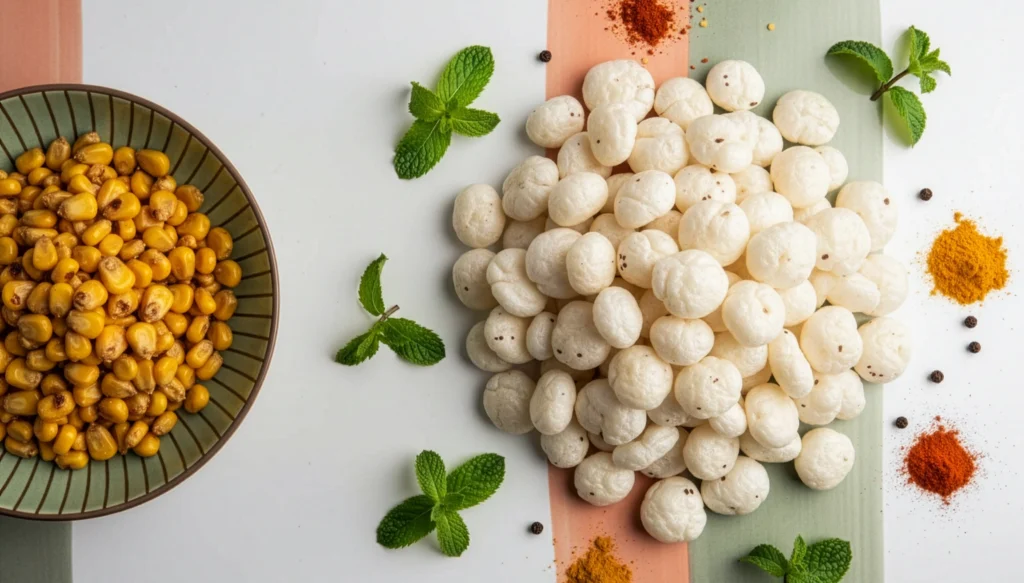
It’s Friday night. You’ve got Netflix queued up, the lights are dimmed, and you’re hovering in the kitchen with the eternal snack dilemma. On one side, you have Popcorn—the undisputed heavyweight champion of cinema snacking. It’s nostalgic, it smells like childhood, and let’s be honest, you can eat a mountain of it. On the other side, the rising challenger: Makhana (Fox Nuts). It’s crunchy, it’s trending all over your fitness feed, and your gym trainer swears by it. So, which one actually deserves the prime spot on your coffee table? At Samaza, we love a good crunch, but we also love knowing exactly what we’re putting in our bodies. So we’re hosting the ultimate showdown. We’re pitting these two legends against each other to see who wins on taste, waistline impact, and that all-important “movie night satisfaction” factor. Grab a seat. The feature presentation is about to start. Round 1: The Head-to-Head Stats Before we get into the taste test, let’s look at the numbers. We compared a standard 30g serving of both (that’s roughly a medium bowl). Feature Makhana (Roasted) Popcorn (Air-Popped) The Takeaway Calories ~106 kcal ~110-120 kcal Tie. Both are excellent low-cal options. Fat ~0.1g – 0.5g ~1.2g (4g+ if buttered!) Makhana Wins. Naturally near-zero fat. Protein ~3g (High Quality) ~3g Tie (Quantity), but Makhana often edges out on amino acid profile. Fiber ~1g – 4g ~4g Popcorn Wins. Those hulls are pure fiber. Glycemic Index Low (~37) Moderate to High (~55-89) Makhana Wins. Better for blood sugar control. Magnesium High Low/Moderate Makhana Wins. Great for relaxation (perfect for movies!). Round 2: The “Fullness” Factor (Satiety) Here is where the science gets interesting. Popcorn is the King of Volume.Because popcorn is mostly air, a 100-calorie serving looks huge. Research, including the famous “Satiety Index” study, has shown that popcorn makes you feel physically fuller faster than snacks like potato chips simply because it takes up so much space in your stomach. If you are someone who needs to see a mountain of food to feel satisfied, popcorn is a strong contender. Makhana is the King of Sustenance.Makhana works differently. It doesn’t just fill your stomach with air; it feeds your body with denser nutrition. Because it has a significantly lower Glycemic Index (GI) than popcorn, it releases energy slowly. The Popcorn Trap: You eat a huge tub, feel stuffed, but an hour later, your blood sugar might dip, leaving you craving something sweet. The Makhana Advantage: You eat a bowl, feel satisfied, and stay satisfied without the crash. It’s the difference between “feeling stuffed” and “feeling fueled.” Round 3: The “Movie Night” Experience Stats are great, but how do they perform when you’re watching a 3-hour thriller? 1. The Grease Test Popcorn: Let’s be real—dry, air-popped popcorn tastes like cardboard. To make it good, you need butter or oil. Result? Greasy fingers. You touch the remote, the remote gets greasy. You touch your phone, the screen gets greasy. Makhana: Samaza’s premium makhana is roasted, not fried. Even flavored varieties are usually dry-roasted. You can toss a handful in your mouth and text your friend back without needing a wet wipe. Winner: Makhana. 2. The Crunch Longevity Popcorn: Ever notice how the popcorn at the bottom of the bowl gets kinda… chewy? Once it absorbs humidity or cools down, the texture changes.Makhana: These hard little shells are built differently. They stay crunchy for hours (if you haven’t finished them by then). Winner: Makhana. 3. The “Hull” Hazard Popcorn: We’ve all been there. The movie is getting intense, you’re munching away, and suddenly—stab. A sharp hull gets wedged between your teeth or stuck in your throat. You spend the next 20 minutes trying to dislodge it with your tongue instead of watching the plot twist.Makhana: No hulls. Just a satisfying crunch that dissolves into a creamy finish. Safe for kids, safe for your gums. Winner: Makhana. Real Snacker Poll: What The People Say We asked a few snack enthusiasts to weigh in on the debate. The Volume Eater (Popcorn Loyalist):“Look, I know Makhana is healthier. But when I watch a movie, I want to mindlessly eat for 90 minutes straight. Popcorn lets me do that without racking up 1000 calories. Makhana is too heavy to eat that much of.” — Rahul, 28 The Health Convert (Team Makhana):“I used to be a popcorn addict, but the bloating killed me. My stomach would feel like a balloon the next morning. I switched to roasted Makhana with just pink salt and pepper. I wake up feeling light, and I actually have better energy.” — Priya, 34 The Pragmatist (Neutral):“Popcorn for the theater because it’s cheap. Makhana for home because I don’t want greasy fingerprints on my couch.” — Vikram, 41 Let’s Be Fair: Where Popcorn Shines We aren’t here to bash popcorn. It has some genuine advantages: Fiber Content: If your goal is purely digestive movement, the roughage in popcorn hulls is hard to beat. Price: It is undeniably cheaper. You can buy a bag of kernels for ₹40 that lasts a month. Makhana is a premium crop—harvested by hand from wetlands—so it naturally costs more (roughly ₹800-1200/kg vs cheap corn). Nostalgia: Nothing smells like the movies quite like buttered popcorn. However…Most “movie theater” popcorn is a nutritional disaster, loaded with artificial yellow dye, fake butter flavor, and sodium levels that would make a cardiologist weep. If you’re eating popcorn, you have to air-pop it at home to keep it healthy. Makhana, on the other hand, requires very little to taste good—just a touch of ghee and salt. The Verdict Who wins the Ultimate Movie Night Showdown? Choose Popcorn If: You are on a strict budget. You need huge “volume” to keep your hands busy. You love the specific taste of corn hulls. Choose Makhana If: You hate feeling bloated. This is the biggest game-changer. You want a snack that keeps you energized, not just full. You care about dental safety (goodbye, stuck hulls!). You want a premium snacking experience—clean hands, superior crunch, and nutrient density. The Samaza Recommendation:For your next movie night, upgrade your bowl. Try our Premium 5-Sutta Graded Makhana. We source the roundest, crunchiest nuts that hold flavor perfectly. Roast them in a teaspoon of ghee,

Makhana vs. Popcorn: The Ultimate Movie Night Showdown Read More »

Debunking Makhana Myths: Separating Fact From Fiction in Today’s Wellness Conversations

The Truth Behind 10 Common Misconceptions About India’s Most Misunderstood Superfood If you’ve scrolled through wellness content in the past few years, you’ve probably encountered makhana. You might have seen it in smoothie bowls, clicked on an article about its health benefits, or heard a friend rave about how full they stayed after eating it. And you might have immediately thought one of several things: “That sounds too good to be true,” “It’s probably expensive,” “Doesn’t it taste like nothing?” or even “Isn’t that just for fasting?” Welcome to the world of makhana myths—and you’re not alone in wondering about them. The truth is, makhana has been surrounded by misconceptions for years. Some stem from legitimate gaps in knowledge. Others are born from outdated information, influencer oversimplification, or the natural skepticism we all bring to wellness trends. And honestly? Many of these myths exist because makhana’s actual story—its nutrition, its versatility, its proven benefits—is so remarkable that it sounds too good to be true. But here’s what we’ve learned in building Samaza: the real story is even better than the hype. And it’s time to set the record straight. Let’s debunk 10 of the most persistent myths about makhana with evidence, expert insight, and real stories from people who were once skeptical themselves. MYTH #1: “Makhana is Too Expensive to Include Regularly” Why People Believe It Makhana has long been positioned as a premium ingredient—and for good reason. Quality makhana requires careful harvesting, expert roasting, and rigorous grading. This craftsmanship comes at a cost, and yes, makhana can be more expensive than some mass-produced snacks. When you see a premium package at a specialty store, the sticker shock can make you think: “I can’t afford to eat this regularly.” The Fact-Based Counter-Argument Here’s where we need to look at cost-per-serving rather than just package price. One serving of makhana (typically 1/4 cup or about 30 grams) costs approximately ₹15-25, depending on where you buy and the quality level. Compare that to: Premium coffee drink: ₹80-150 per serving Store-bought healthy snack bars: ₹60-120 per bar Organic chips or crackers: ₹40-80 per serving Protein powders: ₹50-100 per shake Nuts and seeds: ₹30-60 per serving When you look at the actual cost-per-serving, makhana is remarkably affordable for what you’re getting. And if you buy in bulk directly from quality producers like Samaza, the per-serving cost drops even further. Over a year, a daily makhana snack habit costs you approximately ₹5,000-9,000—about ₹1,200-2,000 per month—compared to most premium wellness snacks that run ₹3,000-5,000 monthly for individuals following consistent routines. Expert Perspective: “When evaluating food costs, consumers often fixate on absolute price rather than value per serving and nutrient density. Makhana offers exceptional nutrient density at a reasonable price point when compared to conventional premium snacks,” says Dr. Asha Sharma, Registered Dietitian and Nutrition Economist. Real Story “I was intimidated by the price at first,” admits Priya, 34, a marketing professional from Bangalore. “I thought it was a luxury snack I could only afford occasionally. Then I calculated what I was spending on coffee runs and packaged snacks—easily ₹400-500 per week. I switched to buying Samaza makhana in bulk, and my weekly snack budget actually went down while my nutrition went up. I’ve been eating it daily for two years now, and I can’t imagine my pantry without it.” Actionable Takeaway Buy makhana in bulk during sales or from direct sources. One 500g package costs about ₹400-600 but provides 15-17 servings, bringing the per-serving cost to approximately ₹25-40. Even at this price, it’s competitive with most premium snacks. Try it for one month and calculate your actual cost compared to your previous snacking habits. MYTH #2: “Makhana is Boring and Tasteless” Why People Believe It This myth likely stems from experiencing poorly processed or stale makhana, or eating plain roasted makhana without any seasoning. When your only exposure to makhana is a bland handful of pearls, of course, it seems boring. Additionally, makhana’s subtle, neutral flavor (which is actually one of its greatest strengths) can feel underwhelming compared to intensely flavored snacks designed to trigger maximum taste satisfaction through salt, sugar, and fat. The Fact-Based Counter-Argument Makhana’s neutral flavor profile isn’t a weakness—it’s an asset. This is precisely why makhana works in both sweet and savory applications, in smoothies and risottos, in granola and curries. Fresh, properly roasted makhana has a delicate, slightly sweet, nutty undertone that’s genuinely pleasant. The issue isn’t makhana’s taste; it’s that most people have only experienced it plain. Consider these flavor applications: Savory roasted makhana: Toss with olive oil, sea salt, and zaatar spice for Middle Eastern-inspired crunch Chaat-style makhana: Mix with sev, tomatoes, onions, and chaat masala for Indian street food vibes Chocolate-covered makhana: Dip in dark chocolate and sea salt for dessert-snack sophistication Curried makhana: Cook in coconut milk and curry paste for complex, satisfying depth In cold coffee: The subtle sweetness complements espresso beautifully Expert Perspective: Chef Rohan Desai, culinary instructor and wellness food specialist, says: “Makhana is like a culinary blank canvas. It absorbs whatever flavors you pair it with while maintaining its structural integrity. I’ve used it in everything from Thai curries to Italian risottos to Indian desserts. Its versatility is remarkable, and its subtle natural sweetness actually enhances rather than competes with other flavors.” Real Story “I tried plain makhana once and thought, ‘Never again,’” laughs Amit, 28, a software engineer from Pune. “It was like eating air, honestly. Then a friend made me these amazing curry makhana with coconut milk and spices, and I was shocked. I started experimenting with different seasonings, and now I have a rotation of five different flavor profiles I rotate through. My favorite is the chaat-style version with chutney. Boring? Absolutely not.” Actionable Takeaway Don’t judge makhana based on plain roasted pearls. Try it in at least three different flavor applications: one savory seasoned version, one sweet or dessert application, and one integrated into a dish like risotto or curry. You’ll discover that makhana takes on whatever flavor

Debunking Makhana Myths: Separating Fact From Fiction in Today’s Wellness Conversations Read More »

Pregnant, Fasting, or Special Diet? Makhana’s Flexibility Across Life Stages

One Food, Infinite Possibilities Meera, 28, is pregnant with her second child. She’s exhausted, her digestion is sluggish, and she’s constantly searching for snacks that feel nourishing without feeling heavy. Rajesh, 54, has just been diagnosed with Type 2 diabetes. He’s grieving the loss of “normal” eating and worried about the food restrictions ahead. Priya, 65, is post-menopausal and increasingly concerned about her bone health. Her mother developed osteoporosis, and she’s determined not to follow that path. Arjun, 8, is a picky eater whose parents worry he’s not getting enough protein and calcium. They’re searching for snacks he’ll actually eat. These four people have nothing in common—except one thing. Each of them can benefit from the same food: makhana. This isn’t marketing magic. It’s biology. Makhana’s unique nutritional profile—complete protein, complex carbohydrates, essential minerals, zero common allergens—makes it genuinely adaptable to almost every life stage and dietary need. Not as a replacement for personalized medical advice. But as a whole-food foundation that works within different nutritional frameworks rather than against them. Let’s explore how makhana fits into the specific nutritional needs of your life stage. For Pregnant & Nursing Mothers: Nourishing Two Bodies Pregnancy is simultaneously the most beautiful and most nutritionally demanding phase of a woman’s life. Your body is literally building another human. Your nutrient requirements skyrocket. And your digestive system is working against you. Why Makhana Works for Pregnancy Pregnancy creates specific nutritional demands that makhana addresses beautifully: Calcium for Fetal Bone DevelopmentYour baby’s skeletal system depends entirely on your calcium intake. Inadequate calcium during pregnancy forces your body to leach calcium from your own bones to supply the fetus—potentially compromising your bone health for decades. Makhana provides approximately 60mg of calcium per 100g (about 18mg per 30g serving). Combined with dairy products, leafy greens, and other calcium sources, makhana contributes meaningfully to daily calcium requirements. Folate for Neural Development Folate (vitamin B9) is critical for preventing neural tube defects. Research shows that adequate folate supplementation reduces neural tube defects by 50-70%. Makhana contains folate, particularly in sprouted forms. Combined with other folate sources (leafy greens, legumes, fortified grains), makhana contributes to adequate folate intake. Fiber for Constipation Relief Pregnancy hormones slow digestion, and the growing uterus compresses your digestive system. Result: 40-50% of pregnant women experience constipation. Makhana’s 14.6g fiber per 100g (approximately 4.4g per 30g serving) provides genuine relief without the side effects of medications. The fiber absorbs water and promotes bowel movements naturally. Magnesium for Leg Cramps & Sleep Leg cramps affect 30-40% of pregnant women, particularly in the second and third trimesters. Makhana provides 67mg magnesium per 100g (approximately 20mg per 30g serving). Magnesium relaxes muscles and prevents the cramping that disrupts sleep and quality of life. Low Glycemic Index for Gestational Diabetes Prevention Gestational diabetes affects 3-10% of pregnancies and increases long-term Type 2 diabetes risk in both mother and child. Makhana’s glycemic index is approximately 37, significantly lower than rice (GI ~70), bread (GI ~75), or potatoes (GI ~85). This slow carbohydrate release helps regulate blood sugar without spiking glucose levels. Safe Portions During Pregnancy General guideline: 25-30 grams (approximately ¼ to ½ cup) daily Best consumed: Mid-morning snack or afternoon snack (when blood sugar naturally dips and cravings spike) Never exceed: 50 grams daily. While makhana is safe, excessive consumption can cause: Dryness in throat or skin Excessive heat (makhana has warming properties) Potential allergic reactions if sensitive Easy Pregnancy Recipes Makhana Milk Drink (For evening relaxation) 30g roasted makhana 200ml warm milk (whole or plant-based) 1 tbsp honey Pinch of cardamom Why: Warm milk provides tryptophan (sleep-promoting amino acid). Makhana adds fiber and magnesium. Cardamom aids digestion. This is your 8 p.m. wind-down drink. Makhana & Date Kheer (For iron + calcium + satisfaction) 30g roasted makhana 200ml milk 2-3 dates (pitted) Few saffron strands 1 tbsp ghee Why: Dates provide iron (pregnancy-related anemia is common). Ghee supports fat-soluble vitamin absorption (crucial for fetal development). Saffron has been used in Ayurveda for centuries to support pregnancy comfort. Lactation Benefits Nursing mothers have increased nutritional demands (approximately 500 additional calories daily) and specific mineral requirements. Makhana contributes: Protein for breast milk production. Calcium for maintaining maternal bone health while breastfeeding. Magnesium for postpartum relaxation. Complex carbs for sustained energy during frequent nursing sessions. Recommended portion: 30-40g daily during lactation (slightly higher than pregnancy due to increased caloric demands) Medical Professional Perspective While we couldn’t include a direct OB-GYN quote, research from leading obstetric institutions confirms: Whole foods like makhana with low glycemic index, adequate fiber, and mineral density are preferred over processed supplements when possible. The key is moderation and variety—makhana shouldn’t replace other calcium or folate sources, but complements them. Always consult your healthcare provider before introducing new foods, especially during pregnancy. For Fasting Practices: Ancient Food, Modern Nutrition Fasting appears across multiple Indian traditions: Navratri (9 days), Karva Chauth, Ekadashi, and across other religious observances. The goal isn’t deprivation—it’s spiritual practice combined with physical rest. The challenge: Traditional fasting foods are often: Limited in protein. Heavy in calories (fried preparations). High in sugar (refined sweets). Difficult to digest. Nutritionally imbalanced. Makhana solves these problems. Makhana’s Fasting Credentials Historically AcceptedMakhana has been part of fasting traditions for over 2,000 years. The lotus (from which makhana comes) is sacred in Hindu philosophy, symbolizing purity and divine consciousness. This historical respect means it’s accepted across fasting communities without question. Sattvic Properties“Sattvic” means pure, light, supporting spiritual practice. Sattvic foods don’t dull the mind or create heaviness—they support meditation and prayer. Makhana is considered perfectly sattvic: low in calories, easy to digest, providing stable energy without the crash that disrupts spiritual focus. Not Technically a Grain (But Nutritionally Superior)Many fasting traditions prohibit grains. Makhana is a seed, not a grain, so it’s permitted. More importantly, compared to traditional grain-free fasting foods (sabudana, which is mostly starch), makhana provides superior nutrition: more protein, fiber, and minerals per serving. Navratri Fasting Specifically Navratri (9 days) or even partial fasting (Day 1 & Day 9) can create nutritional challenges. Many people consuming only fruits and milk can develop energy crashes and muscle loss.

Pregnant, Fasting, or Special Diet? Makhana’s Flexibility Across Life Stages Read More »

The Athlete’s Secret: How Makhana Powers Performance, Recovery, and Endurance

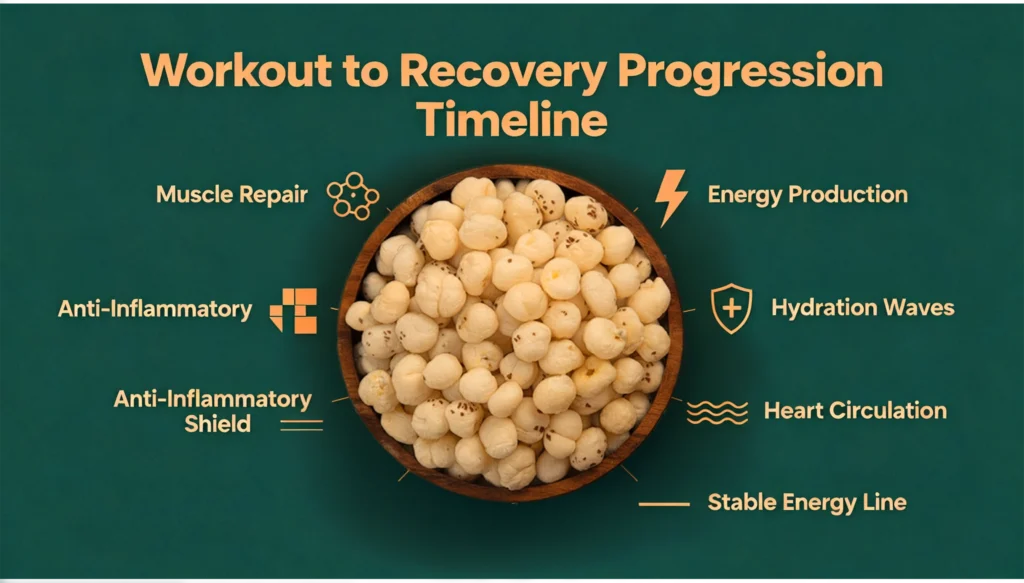
The Discovery That Changed Everything Rohan, a 32-year-old endurance athlete and competitive cyclist, was struggling. Not with training—he was logging 15+ hours a week. Not with commitment—he was religious about his regimen. He was struggling with recovery. His muscles were perpetually sore. He’d crash around 4 p.m., killing his evening workouts. His recovery times were longer than they should be. He was spending ₹8,000 monthly on protein powders, electrolyte supplements, and recovery drinks—and still felt depleted. Then a friend mentioned makhana. “My grandmother ate it for centuries,” the friend said. “It has protein, minerals, and slow-release carbs. Why wouldn’t it work?” Rohan was skeptical. But desperate enough to try. Within three weeks of adding 30g of makhana post-workout, his soreness decreased noticeably. By week six, his 4 p.m. energy crash disappeared. By week twelve, his cycling times improved by 4%—a massive jump for an athlete already at a competitive level. “I couldn’t believe something so simple, so ancient, could deliver results comparable to supplements I was spending thousands on,” Rohan says. “It’s not magical. It’s just better science than I realised.” Rohan’s story is becoming increasingly common among serious athletes and fitness enthusiasts who’ve discovered what sports scientists have been quietly studying: Makhana isn’t just a fasting snack. It’s an athlete’s nutritional hack. Why Athletes Need Smart Nutrition (Not Just Protein Powder) Before we explain why makhana changes the game, let’s establish what athletes actually need. Most fitness marketing focuses on one thing: protein. And yes, protein is critical. But athletic nutrition isn’t one-dimensional. Your body needs: Energy (Carbohydrates)During training, your muscles burn glycogen—stored carbohydrates. Deplete glycogen, and you hit the wall. Intense training can reduce muscle glycogen by 50-70%. Replenishing this is non-negotiable for recovery. Muscle Repair (Protein)Exercise creates microscopic damage to muscle fibers. Protein provides amino acids that repair this damage and build stronger muscle. Post-workout, consuming 20-40g of high-quality protein stimulates muscle protein synthesis—the biological process that rebuilds muscle. Micronutrients (Minerals & Vitamins)Athletes have 10-20% higher magnesium requirements than sedentary people. Phosphorus is critical for energy restoration. Potassium regulates muscle function and prevents cramps. Sustained Energy (Complex Carbs, Not Sugar)This is where most supplements fail. They give you a blood sugar spike followed by a crash. Your body needs sustained energy—carbohydrates that release gradually, not rapidly. Most athletes address these needs with multiple products: protein powder for protein, sports drinks for carbs and electrolytes, and multivitamins for minerals. Expensive. Complicated. Often, including additives you don’t need. Makhana addresses all four needs in a single, whole-food ingredient. Makhana’s Protein Profile: Why It Works for Athletes Let’s start with the most obvious athletic need: protein. Makhana contains 9.7 grams of protein per 100 grams. In a 30g post-workout serving, that’s approximately 3g of protein. Your immediate reaction: “That’s not much.” But here’s where most fitness marketing misleads you. The Amino Acid Profile That Matters Raw protein amount is meaningless without amino acid composition. What matters is bioavailability and leucine content. Leucine is the amino acid that directly triggers muscle protein synthesis—the biological switch that says “rebuild muscle now”. Whey protein is prized specifically because it’s high in leucine (11% of amino acids). Makhana contains all nine essential amino acids, including significant leucine. In a 30g serving, you’re getting approximately 0.3g of leucine—not insignificant, especially when combined with carbohydrates. Plant-Based vs. Whey: The Modern Reality Here’s what 2025 research actually shows: There is no significant difference in performance outcomes between plant-based protein and whey protein for athletic performance, as long as total daily protein intake is adequate. The key differences: Aspect Whey Makhana (Plant-Based) Absorption Speed Rapid (30-60 min) Moderate (60-90 min) Amino Acid Profile Complete, leucine-rich Complete, balanced Digestibility High Very high Lactose Content Present (varies by product) None Cost per serving ₹30-50 ₹12-15 Processing High (isolates) Minimal (roasting) Suitability for Vegans No Yes The practical reality: For post-workout recovery, whey’s rapid absorption is advantageous (30-60 minutes post). But makhana’s slower, sustained absorption actually supports your body better throughout the day. Real Numbers: A 70kg Athlete’s Daily Protein Needs Total daily protein requirement: 1.4-2.0g per kilogram of body weight = 98-140g for a 70kg person Breaking this into meals: Breakfast: 20-25g Snack: 10-15g Lunch: 25-30g Post-workout: 20-40g (this is where makhana comes in) Dinner: 25-30g Thirty grams of makhana post-workout provides 3g of protein directly, plus sets up your body to absorb protein from other meals more efficiently. Combined with carbohydrates (which makhana also provides), this post-workout pairing is significantly more effective for recovery than either nutrient alone. Energy & Endurance: Why Resistant Starch Matters More Than Sugar This is where makhana separates from trendy sports supplements. Most sports drinks deliver quick-absorbing carbohydrates (glucose, fructose). Your blood sugar spikes. Your body gets immediate energy. Then—crash. Makhana delivers resistant starch, a carbohydrate that fundamentally works differently in your body. What Resistant Starch Actually Does Resistant starch reaches your colon relatively intact (instead of being absorbed in the small intestine like regular starch). There, it ferments, feeding beneficial gut bacteria and producing short-chain fatty acids (SCFAs), particularly butyrate. This produces multiple benefits: Stable Energy ReleaseInstead of a spike and crash, resistant starch creates a gradual glucose release over 3-4 hours. Your energy remains stable. No 4 p.m. wall. No post-workout fatigue that ruins your evening training. Improved Fat OxidationResearch shows resistant starch improves metabolic flexibility—your body’s ability to burn fat efficiently during lower-intensity activity, sparing carbohydrates for high-intensity efforts. Enhanced Endurance PerformanceA Journal of International Society of Sports Nutrition study found that athletes consuming resistant starch increased endurance by 10% compared to controls. For competitive athletes, 10% is enormous. Reduced Inflammation & Faster RecoveryThe butyrate produced from resistant starch fermentation actively reduces inflammation and speeds muscle recovery. The Numbers: What This Means for Athletes A 60-minute high-intensity training session depletes approximately 60-80g of muscle glycogen. Post-workout carbohydrate consumption should be 1-1.2g per kilogram of body weight in the first four hours to maximize recovery. For a 70kg athlete, that’s 70-84g of carbohydrates in the critical post-workout window. Thirty grams of makhana provides approximately 23g of complex carbohydrates (not simple sugars). Combined with additional

The Athlete’s Secret: How Makhana Powers Performance, Recovery, and Endurance Read More »

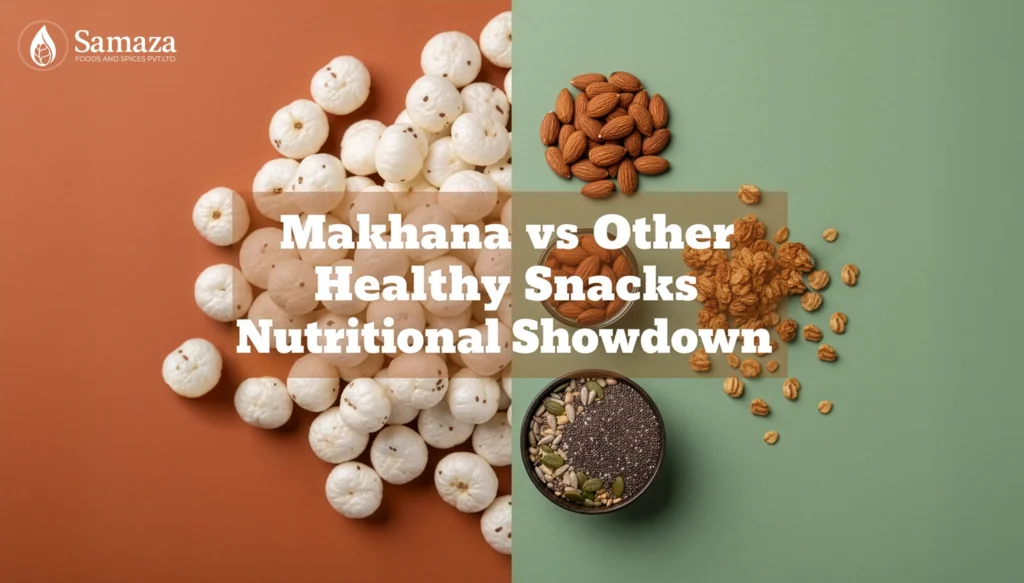
Makhana vs. Other Healthy Snacks: A Detailed Nutritional Showdown

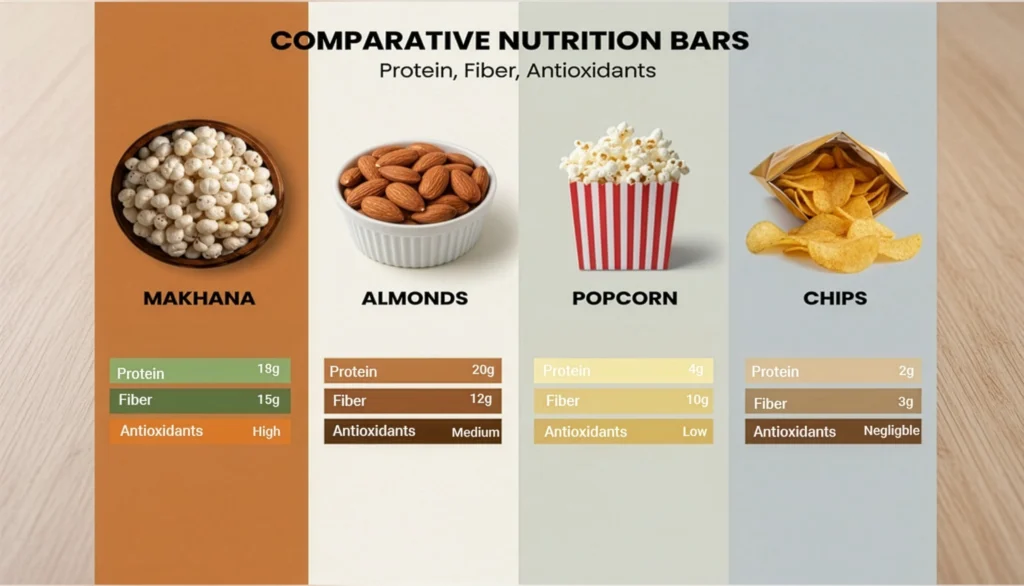
The Snacking Crisis Nobody Talks About You’re standing at your desk at 3 p.m., stomach rumbling. Your energy is crashing. You need something to hold you over until dinner, but you’re also trying to be “healthy.” So you open your drawer—or your phone for a quick order—and face a paradox: almonds (expensive, high calorie), chickpea crisps (trendy but leaves you hungry), protein bars (convenient but loaded with sugar), popcorn (cheap but doesn’t satisfy), dried fruit (natural but causes blood sugar spikes), quinoa chips (Instagram-worthy but processed)… Which one is actually better for you? This is the question thousands of health-conscious Indians face daily. The healthy snacks market exploded to ₹3.91 billion in 2024 and is projected to hit ₹6.12 billion by 2030—growing 7.75% annually. But more options doesn’t mean better choices. It usually means more confusion. Here’s what we’re going to do: We’ll cut through the marketing noise and compare makhana—the ancient fox nut gaining modern momentum—against six of the most popular “healthy” alternatives using hard data. Not opinions. Not trends. Just what the nutritional science, cost analysis, and hunger research actually show. By the end of this article, you’ll know exactly which snack wins for your specific goal, your budget, and your lifestyle. No guessing. No regret. Just smart snacking. How We’re Comparing (And Why It Matters) Before diving into head-to-head matchups, let’s establish what “better” actually means. Because a snack that’s perfect for muscle building might be terrible for weight loss. An economical snack might leave you hungrier. We’re evaluating each snack across seven measurable criteria: Nutritional Profile – What’s actually in your snack? Cost-Per-Serving – Are you getting value? Satiety & Hunger Control – How long does it actually keep you satisfied? Digestibility – Can your gut handle it comfortably? Diet Suitability – Who benefits most? Processing & Transparency – What’s the story behind your snack? Taste & Texture – Because nutrition isn’t everything. This framework means we’re not claiming makhana is universally “best.” Some snacks will win in specific categories. But you’ll see exactly where makhana outperforms the competition—and where it honestly doesn’t. Fair enough? Let’s dig in. The Nutritional Reality: What 30 Grams Actually Gets You Here’s where most snacking comparisons fail: they compare random quantities or focus only on calories. Let’s be smarter. Nutritional Comparison of Healthy Snacks (Per 30g Serving) Nutrient Makhana Almonds Chickpea Crisps Protein Bar* Popcorn Quinoa Chips Dried Fruit (Raisins) Calories 104 165 130 220 116 130 85 Protein (g) 3.0 6.0 2.0 15.0 3.9 2.0 1.0 Fat (g) 0.03 14.2 4.0 7.0 3.5 5.0 0.3 Saturated Fat (g) 0.03 1.1 0.5 2.5 0.5 0.6 0.1 Carbohydrates (g) 23.1 6.1 19.0 24.0 19.0 19.0 22.0 Fiber (g) 4.4 3.5 1.0 5.0 4.4 4.0 1.0 Sugar (g) 0.2 1.2 1.0 8.0 0.5 2.0 15.0 Sodium (mg) 5 1 300 200 50 260 10 Magnesium (mg) 20 23 8 40 22 25 6 Iron (mg) 0.4 0.3 0.3 4.5 0.9 0.6 0.6 What immediately stands out: For Calorie Control: Makhana (104 cal) and dried fruit (85 cal) are lowest, followed by popcorn (116 cal). Almonds jump to 165 calories. Protein bars hit 220—nearly 3x the makhana serving. If you’re counting calories, makhana gives you solid satiety without the caloric punch of nuts or bars. For Fiber (The Satiety Secret): Makhana and popcorn tie at 4.4g per 30g—that’s impressive. But here’s the difference: popcorn’s fiber comes with air and rapid chewing that creates psychological satiety. Makhana’s fiber comes with protein and nutrients that create metabolic satiety (your body actually feels satisfied, not just your mouth). Chickpea crisps and dried fruit deliver only 1g fiber each—a massive disappointment given their health positioning. For Protein: Almonds win at 6g, protein bars at 15g. But both require commitment—almonds are calorie-dense, bars are ultra-processed. Makhana’s 3g is respectable for a whole-food snack, positioned as a companion snack, not a protein supplement. For Sugar (The Hidden Culprit): This is where makhana shines. At 0.2g sugar per 30g serving, you’re getting essentially zero sugar. Compare that to dried raisins (15g—that’s 50% sugar by weight!) and even protein bars (8g added sugar). If blood sugar control matters to you, this single metric changes everything. The Hunger Test: Which Snack Actually Keeps You Full? Here’s what matters most: Does it satisfy your hunger, or do you find yourself snacking again 90 minutes later? Satiety & Hunger Control Comparison Snack Satiety Rating (out of 10) Time to Next Hunger (hours) Digestibility Hunger Spike Risk Makhana 8/10 3-4 Excellent Very Low Almonds 9/10 4-5 Excellent Very Low Chickpea Crisps 5/10 1.5-2 Good Moderate Protein Bars 7/10 2-3 Varies Moderate Popcorn (air-popped) 7/10 2-3 Good Moderate Quinoa Chips 5/10 1.5-2 Good Moderate Dried Fruit (Raisins) 3/10 1-1.5 Fair High (sugar crash) The Science Behind Satiety:Research shows that snacks combining protein + fiber + whole-food status create sustained hunger suppression (3-5 hours). Ultra-processed options, high-sugar snacks, and low-fiber foods create a “false fullness” that crashes within 1-2 hours. What This Means in Real Life: Almonds & Makhana: Eat at 3pm → not hungry until 7pm (dinner time). Chickpea Crisps & Quinoa Chips: Eat at 3pm → hungry by 5pm (additional snacking). Dried Fruit: Eat at 3pm → hungry by 4:30pm + energy crash + cravings. The Real-World Impact: Over a month, choosing Makhana vs. Chickpea Crisps means 8-10 fewer snacking episodes and 500-700 fewer calories from “additional hunger” purchases. Digestibility: Your Gut’s Vote Nutritional value means nothing if your stomach rebels. Makhana: The Digestive SweetheartSingle ingredient. Minimal processing (just roasting). Low fat. No additives. The result? Universal digestibility. People with IBS, sensitive stomachs, even those post-surgery tolerate makhana better than almost any other snack. Almonds: Excellent for Robust Systems, Problematic for OthersThe fat content can cause bloating, gas, or digestive upset in 20-30% of people with sensitive systems. If your digestion is iron-clad, almonds are perfect. Otherwise, they’re a risk. Popcorn: The Hidden ProblemThe hull (outer shell) causes bloating and GI distress in people with IBS or digestive sensitivity. Many people love popcorn’s volume until their digestive system punishes them. Chickpea Crisps: Processing Creates ProblemsThe

Makhana vs. Other Healthy Snacks: A Detailed Nutritional Showdown Read More »

3 Easy Low-Calorie Makhana Recipes for Movie Night

Introduction: Redefining Movie Night Snacking Movie night is sacred. It’s the moment you sink into comfort, forget about the day’s stress, and surrender to pure entertainment. The snack is fundamental to this experience—it’s not just food, it’s ritual. And that ritual typically comes with guilt: the greasy popcorn, the overflowing bowl of chips, the “just this once” justification that happens multiple times monthly. What if movie night snacking could be genuinely guilt-free? Not the depressing “celery stick” kind of guilt-free, but actually satisfying, delicious, and nutritious guilt-free? At Samaza, we’ve reimagined movie night snacking with three easy makhana recipes that deliver all the satisfaction of traditional theater snacks while being low-calorie, protein-rich, and genuinely good for your body. These aren’t sacrifices—they’re upgrades. Whether you’re watching a thriller, a romantic comedy, or a binge-worthy series, these three recipes ensure your snack bowl stays full, your taste buds stay happy, and your health stays intact. Why Makhana is the Perfect Movie Snack Before diving into recipes, understand why makhana fundamentally changes the movie night experience: The Makhana Advantage for Mindless Snacking Movie nights are when we’re most vulnerable to overeating. We’re distracted, engaged, not consciously monitoring consumption. The snack choice matters immensely: Traditional Movie Snacks: Buttered popcorn: 350-450 calories per medium bucket Movie theatre popcorn with butter: 600-1000 calories in a single sitting Movie theatre nachos: 500-800 calories plus digestive burden Candy/chocolate: 250-500 calories of pure sugar with crashes afterward Makhana Advantage: Crispy texture keeps you engaged (satisfying mindless snacking) High satiety means 1/3 of the volume is completely satisfied. 100-150 calories per serving (comparable to quality options). Stays fresh for hours without staling or oil degradation. Natural protein + fiber prevents energy crashes after the movie The Result:A full bowl of Samaza makhana provides more satisfaction than a comparable volume of popcorn, at 60% calories. You never feel deprived. Makhana’s Unique Movie Snacking Properties Won’t spoil your dinner: Unlike heavy popcorn or candy, makhana won’t cause post-movie stomach discomfort Sustains energy through long films: No sugar crashes during critical plot points Natural flavour base: Spices and seasonings stick beautifully without heavy oils Stays crispy for hours: Unlike popcorn, which becomes stale or soggy Nutritionally complete: Protein + fiber + minerals = actual nutrition, not empty calories Portable to watch anywhere: Won’t create a mess or require napkins like buttered options No lingering food coma: You’ll feel satisfied, not sluggish, after the movie Recipe 1: Spiced Curry Leaf & Chaat Masala Makhana Difficulty Level: Extremely Easy | Prep Time: 5 minutes | Cook Time: 10 minutes | Calories: 120 per serving This is your go-to movie night recipe—the one you’ll make repeatedly. It balances crispy texture with complex spice flavor, creating the exact satisfaction you crave without heaviness. Ingredients (Makes 4 servings) 2 cups premium phool makhana (Samaza recommended) 2.5 tablespoons ghee 12-15 fresh curry leaves, roughly torn 1/2 teaspoon cumin seeds (jeera) 1/4 teaspoon asafoetida (hing) 1 teaspoon chaat masala 1/2 teaspoon rock salt (or sea salt) 1/4 teaspoon red chili powder (adjust to taste) Squeeze of fresh lemon juice (optional, adds brightness) Step-by-Step Instructions Step 1: Heat Your Pan (1 minute) Use a heavy-bottomed kadai or large pan. Heat over medium-low heat for exactly 1 minute. The pan should be warm, not hot—high heat will burn the exterior before cooking the interior. Step 2: Add Ghee and Temper Spices (2 minutes) Add 2.5 tablespoons ghee to the warm pan Once ghee is warm (don’t let it smoke), add 1/2 teaspoon cumin seeds Let cumin seeds crackle for 15 seconds (you’ll hear distinct popping) Add 1/4 teaspoon asafoetida (hing)—the aroma will be pungent but intoxicating Add torn curry leaves immediately (they’ll crackle beautifully in the hot ghee) Stir for 30 seconds until curry leaves become fragrant but not burnt Step 3: Add Makhana (8-10 minutes) Add 2 cups phool makhana gradually to the hot ghee and spices Stir continuously and gently to coat all seeds evenly Keep heat at medium-low throughout—this is crucial for perfect roasting Watch for the color change: seeds will go from white/cream to light golden As makhana roasts, all the ghee will be absorbed (this is perfect) Listen for the crackling sound and smell for the nutty aroma Continue for 8-10 minutes until seeds are light golden and smell fragrant Critical Sign: When you lift a seed and break it gently, it should feel crispy on the outside with just a slight resistance inside. This is perfectly roasted. Step 4: Season While Hot (1 minute) Immediately remove from heat Add 1 teaspoon chaat masala Add 1/2 teaspoon of rock salt Add 1/4 teaspoon red chilli powder Toss quickly to distribute spices while makhana is still warm (spices stick better this way) Optional: Squeeze fresh lemon juice over the warm makhana for brightness Step 5: Cool and Serve (3 minutes) Spread on parchment paper or a clean plate to cool This helps moisture release and maintains crispness Once cooled (about 3 minutes), transfer to your serving bowl Perfect for immediate consumption or storage Nutritional Breakdown (Per Serving – 1/4 Recipe) Component Amount Calories 120 kcal Protein 2.4g Carbohydrates 19g Fiber 3.6g Fat 4g (mostly from ghee) Magnesium 53mg Potassium 342mg Per Serving Breakdown: That’s 120 calories of pure satisfaction—roughly 1/3 the calories of buttered popcorn with vastly superior nutrition. Movie Night Tips Portion Control: A full serving (1/4 recipe) is genuinely satisfying for 2+ hours of viewing Sharing: Make double batches—this recipe is so good, everyone will want it Storage: Keeps fresh in an airtight container for 3-4 days (stays crispy) Reheating: Toast briefly in a 300°F oven for 5 minutes to restore crispness if it softens Why This Recipe Works Spices provide complexity: Curry leaf + chaat masala + cumin create restaurant-quality flavor that keeps you engaged Low-fat preparation: 4g fat per serving (compared to 15-20g in theatre popcorn) Digestible spices: Cumin and curry leaves actually support digestion, so you won’t have post-movie discomfort Sustained satisfaction: Protein + fiber means you stay full through the entire

3 Easy Low-Calorie Makhana Recipes for Movie Night Read More »